A GWM Ora 5 Ultra has done 3,000 km with us since mid-July: about 40 km a day on weekdays, mixed highway and town, plus weekends and a few longer trips. Here's what it's like to live with, what it really uses, and who it suits. It's a short-term review, so think first impressions with real numbers. Nobody lent us the car or paid for this review. Our car and data are from New Zealand. Prices shown are Australian drive-away prices (with NZ prices alongside).
The short version
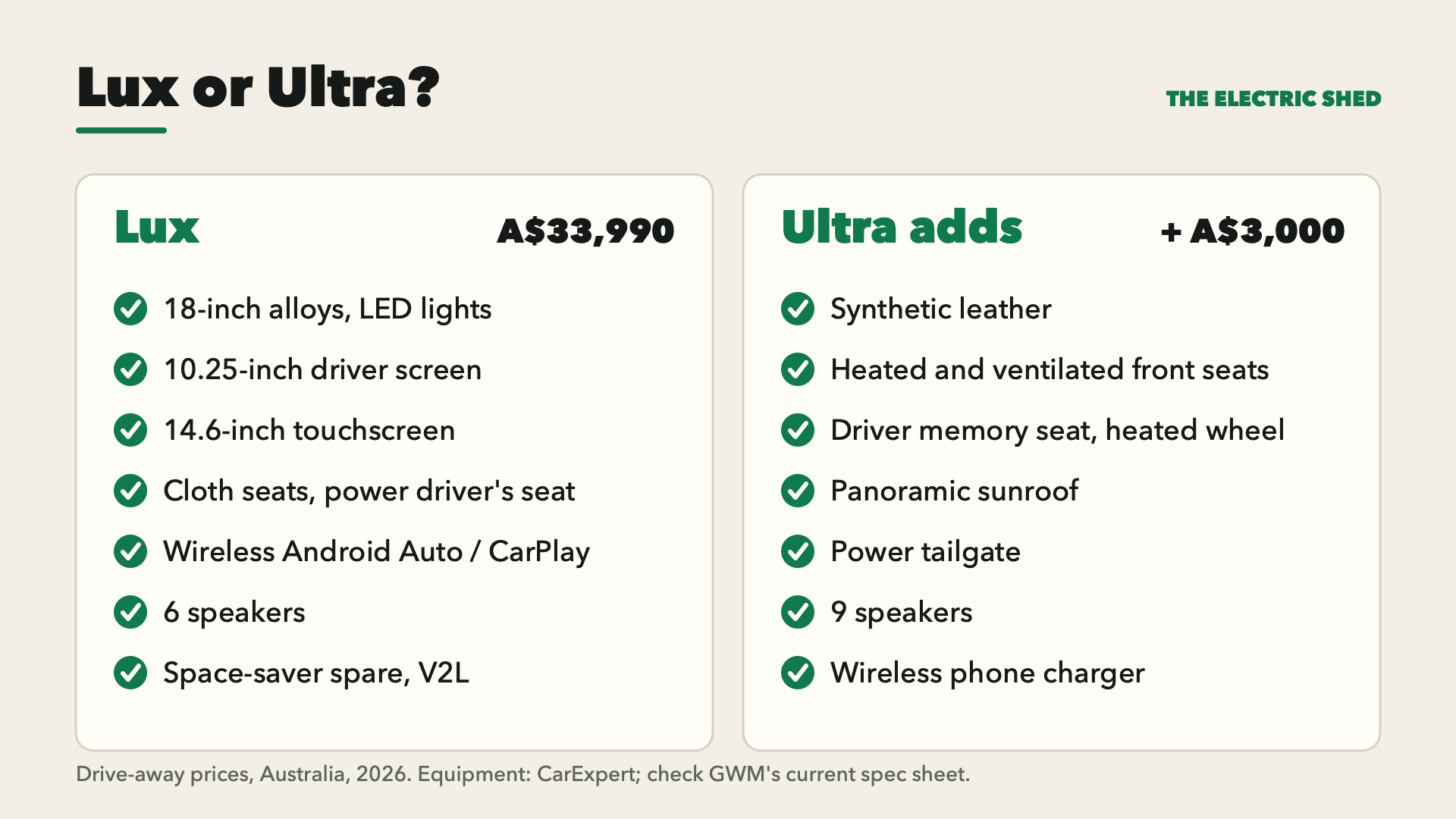
- A$33,990 (Lux) or A$36,990 (Ultra) drive-away (in NZ: NZ$36,990 or NZ$39,990 plus on-road costs) for a small electric SUV with a 58.3 kWh LFP battery and a 150 kW front motor.
- 16 kWh per 100 km on the trip computer, without driving for economy, and about 300 km of comfortable range between charges.
- Comfortable, well equipped and easy to drive. We'd buy it again.
- Three small annoyances, none of them deal-breakers.
- Not yet rated by ANCAP (as of October 2026).
- We test drove the MG4 Urban, Jaecoo J5 and BYD Atto 3. The Ora won on comfort and interior.
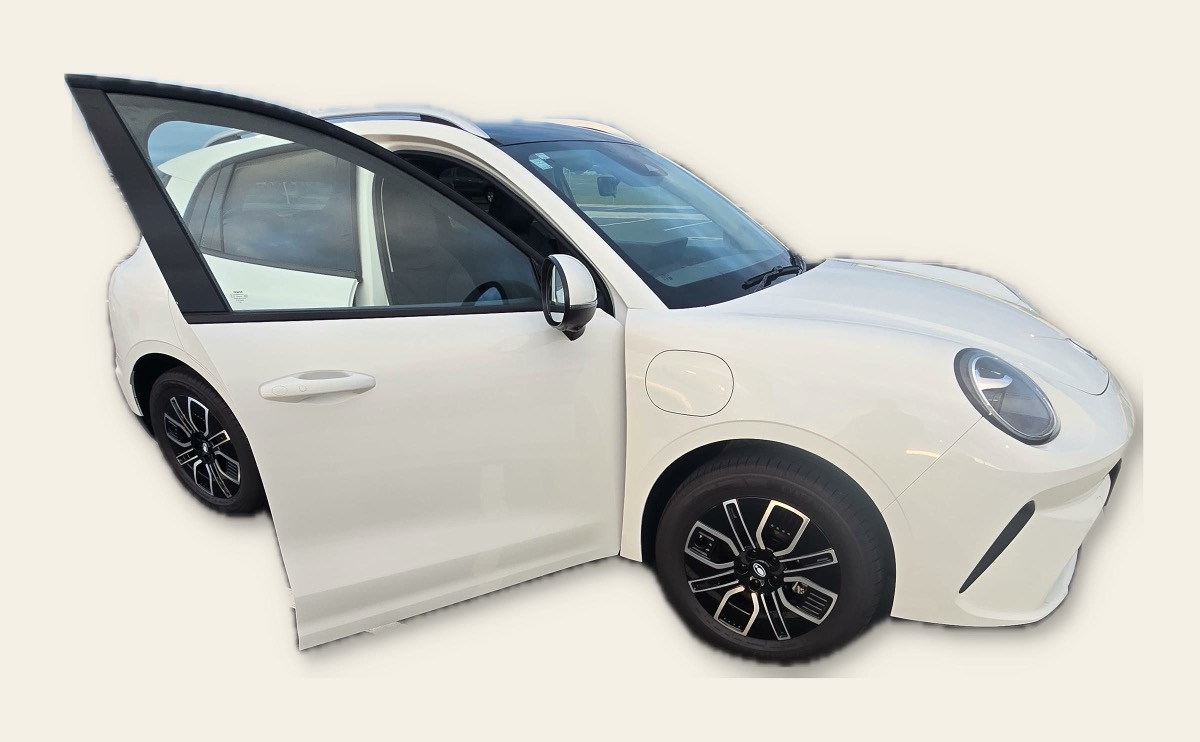
What you get
- Size and space: about 4.5 m long, with a 2.72 m wheelbase. The back seat suits two adults or a couple of teenagers.
- Screens: a 10.25-inch driver display and a 14.6-inch touchscreen, where most settings live.
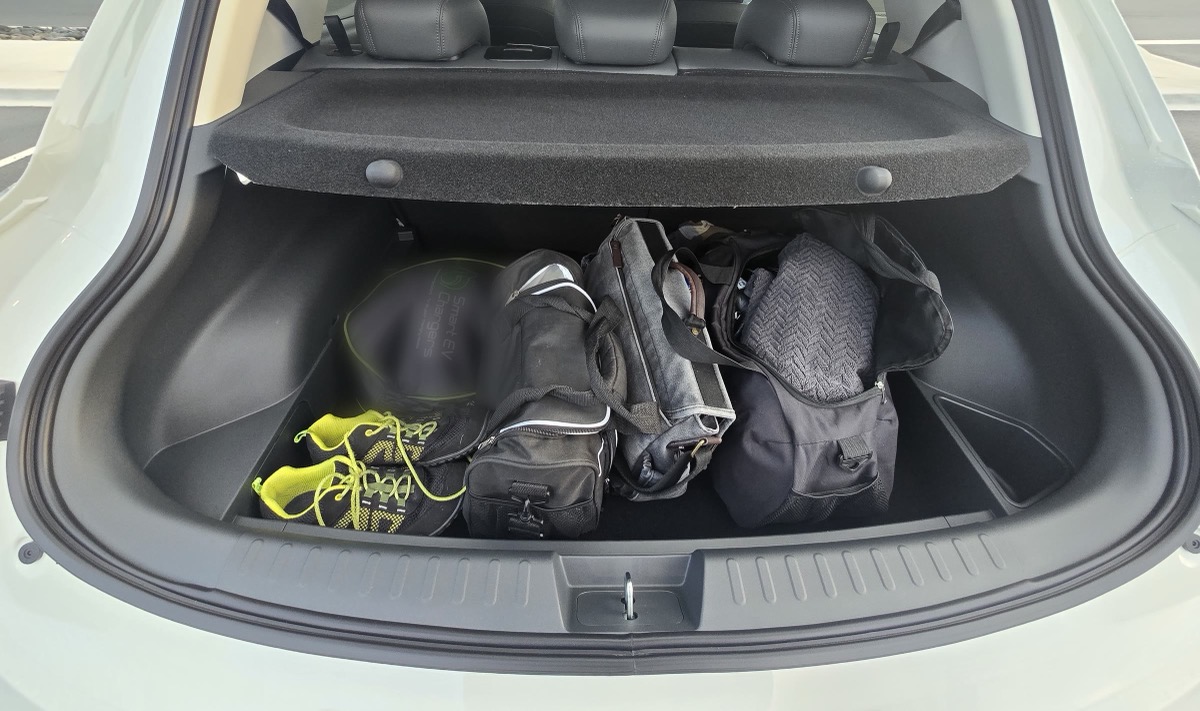
- Boot: 362 L, smallish, with a space-saver spare under the floor.
- Driving: quiet at highway speed, Australian-tuned suspension, four drive modes and a few regen levels.
- The Ultra's extras: for A$3,000 more, you get synthetic leather, heated and ventilated front seats, a memory seat, a heated wheel, a panoramic sunroof, a power tailgate, nine speakers and a wireless phone charger.
Living with it
Good:
- Retro looks: round lamps and curvy wings rather than the usual flat nose.
- Comfort: a smooth ride, a good driving position, and (on the Ultra) heated and ventilated seats.
- Planted: it feels steady in strong crosswinds, thanks to the battery in the floor.
- Easy to drive: enough go when you want it, and strong regen makes town driving easy.
- The tech: wireless Android Auto that just works, a wireless phone pad with cooling air, and physical buttons for the important things.
- Parking: the 360-degree camera makes it easy.
- Small surprises: the sound system is better than expected, and the safety alerts don't nag.
- The app: it warms the car and demists the screen and mirrors before you leave.
- A spare wheel: a space-saver, not just a puncture kit.
Annoying:
- The 360-degree camera switches off too early when you park nose-in.
- The wipers only lift for cleaning after you set service mode on the screen.
- The parcel shelf doesn't lift with the boot lid.
Real-world efficiency and range
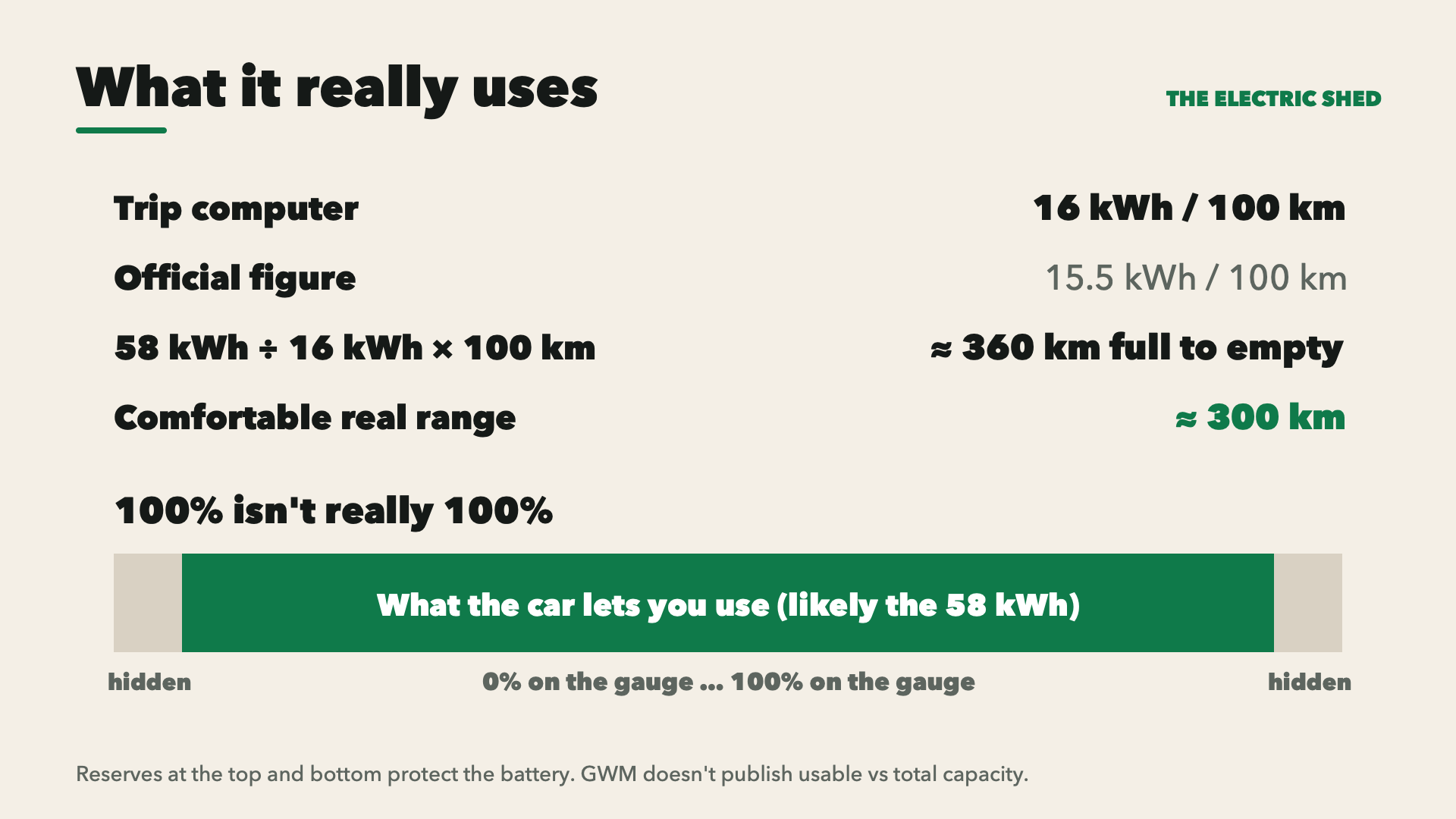
- Efficiency: the trip computer shows 16 kWh/100 km since new, against an official 15.5. That's while still learning the regen after years of petrol cars, so we expect it to fall.
- Range: 58 kWh ÷ 16 × 100 ≈ 360 km from full to empty, so about 300 km of comfortable driving. That's short of the official 430 km, which is normal, especially with highway driving. A dealer software update has since made the range estimate more accurate. We suspect the old one counted hidden reserves: EVs keep some capacity back at the top and bottom to protect the battery, so 100% on the gauge isn't the whole battery.
- Charging:
- At home: mostly one big charge on a sunny weekend. - Fast charging: the car takes up to 120 kW, about 30 minutes for 10–80%. We've only done a couple of short sessions, mainly to learn how, and seen it go above 100 kW.
On one sunny Saturday, 22 kWh of rooftop solar went into the car. The full charging story is on The Electric Shed: GWM Ora 5 review: 3 months, 3,000 km, charged by the sun. It covers how a 6 kW solar inverter charged the car at nearly 10 kW, and where its energy actually came from.
No wall charger? No problem
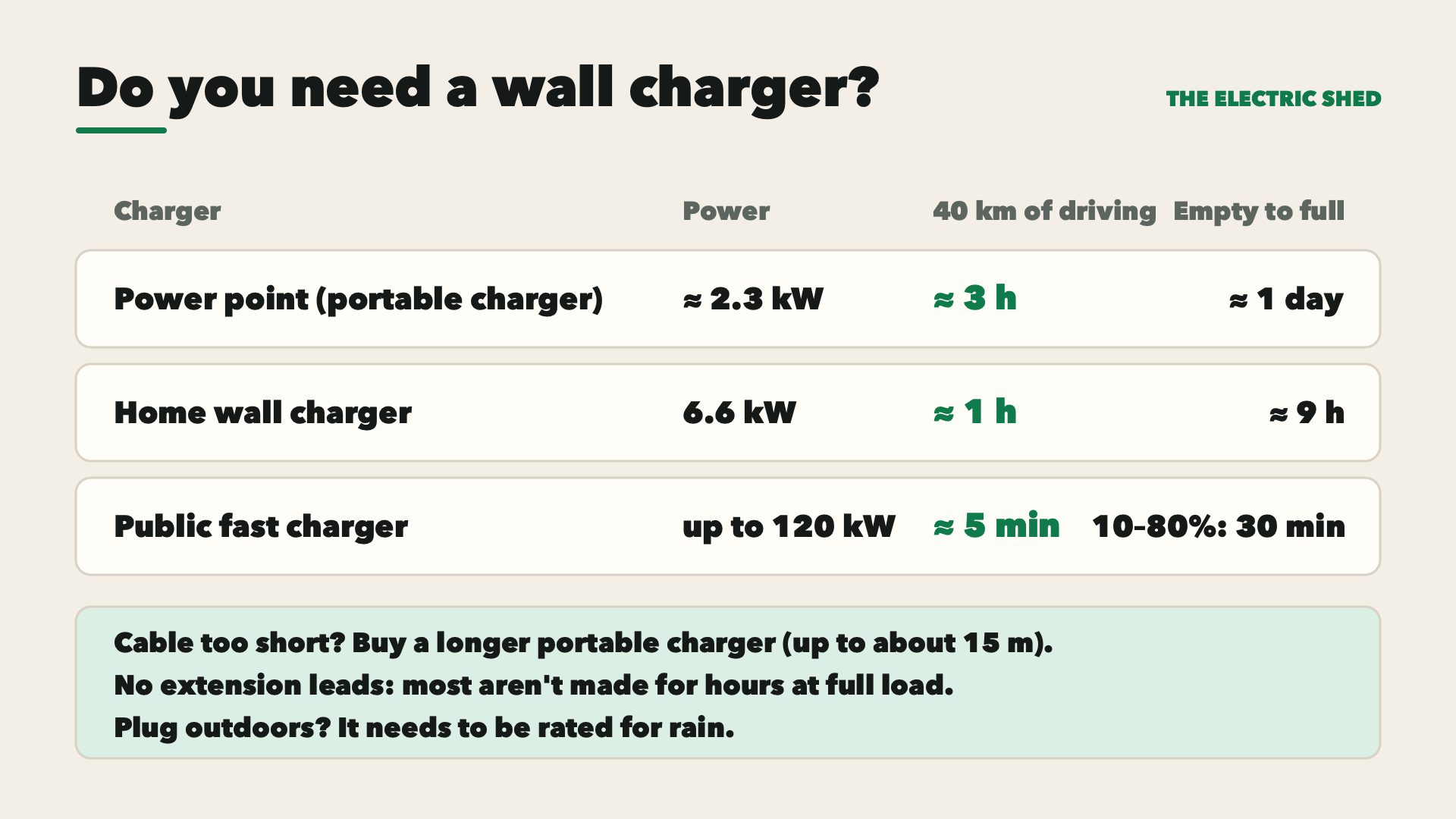
The Ora 5 comes with a portable charger for a normal power point (about 2.3 kW). It's slow from empty (around a day), but 40 km of driving goes back in about 3 hours overnight. A 6.6 kW wall charger does it in about an hour, or empty to full in about 9 hours.
- Need more reach? Buy a longer portable charger (up to about 15 m).
- No extension leads: most aren't built for hours at full load.
- Outdoors: weather-rated plugs only.
What else we drove
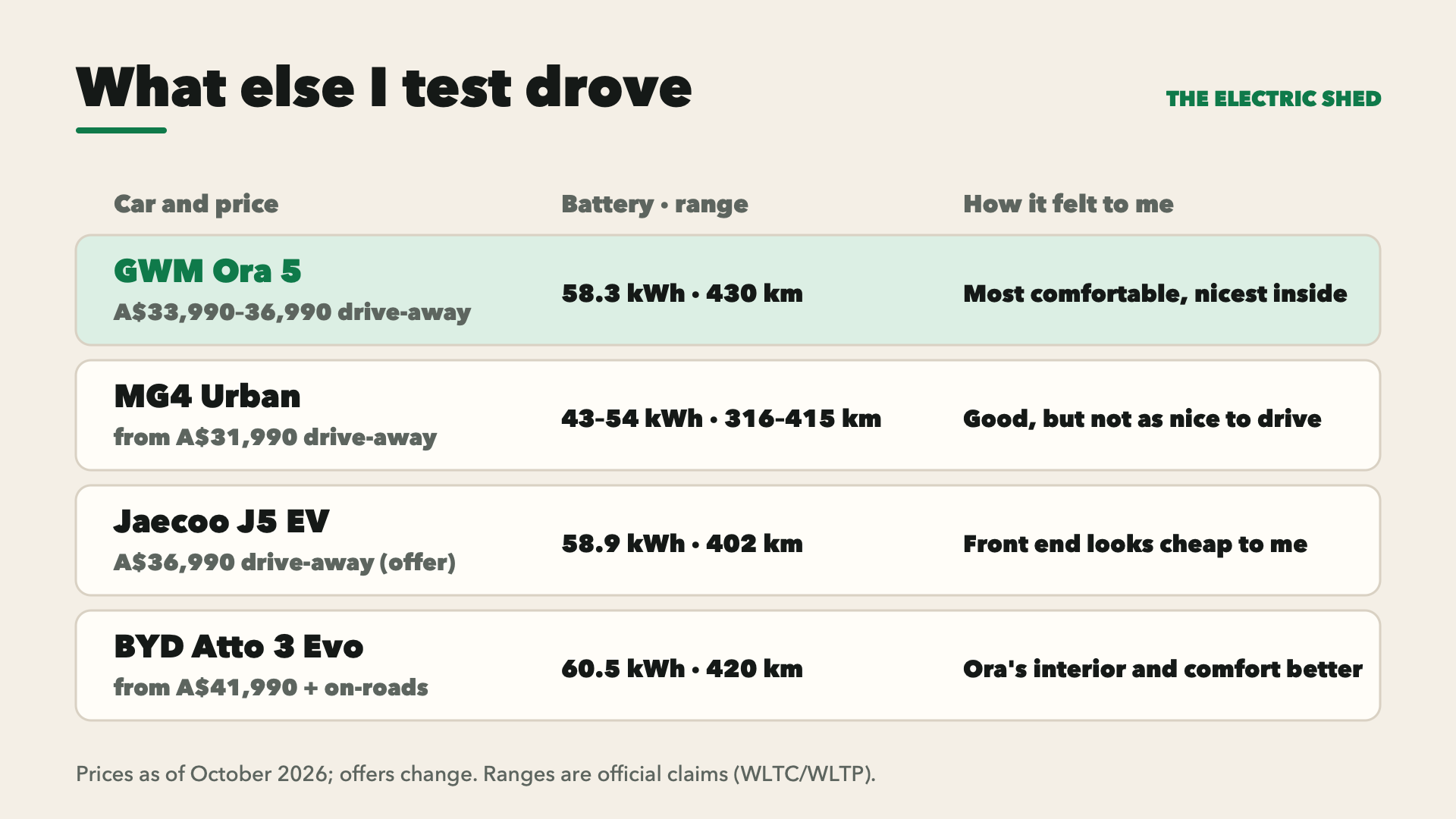
- MG4 Urban (from A$31,990 drive-away): good value, but not as nice to drive.
- Jaecoo J5 EV (A$36,990 drive-away offer): close on price and battery, but the front end looked cheap to us.
- BYD Atto 3 (Evo from A$41,990 plus on-roads): we preferred the Ora's interior and comfort.
We'd have loved it in green, but none were in stock without a wait.
Worth knowing
- Software: GWM's Coffee OS. We've had one over-the-air update and one dealer update (for range accuracy) in three months.
- Safety:
- seven airbags, AEB and adaptive cruise; - no ANCAP rating yet. The 2023 five-star rating is for the earlier Ora hatch.
- Warranty: 7 years on the car and 8 on the battery, both with unlimited kilometres.
- Servicing: capped at A$195 a year in Australia. Resale value is the unknown for a new model from a newer brand.
- Build quality: no squeaks, rattles or wear after 3,000 km.
- Vehicle-to-load: up to 6 kW, with the adapter sold separately.
Who it suits
A good fit if you:
- drive mostly around town, with longer trips now and then (plan a coffee stop and a top-up);
- can charge at home.
Think twice if you:
- need a crash-test rating now;
- need a big boot.
Lux or Ultra? For A$3,000 more, the Ultra's extras make it hard to recommend the Lux.
If you're wondering about the battery long term, see how long EV batteries last. We'll report back at around 10,000 km.
Sources
- GWM Australia: Ora 5 pricing, specifications and warranty.
- GWM New Zealand pricing, via Ingham Driven (13 April 2026) and Autofile (June 2026): Lux NZ$36,990, Ultra NZ$39,990, plus on-road costs.
- The Driven, GWM Ora 5 first drive, 9 July 2026.
- CarExpert, Ora 5 Ultra long-term review introduction, October 2026.
- ANCAP, 2023 GWM Ora rating (the earlier hatch).
- Our own data: trip computer and home charger, New Zealand, mid-July to mid-October 2026.
Photos of our car and diagrams: The Electric Shed. Other photos: Wikimedia Commons, credited under each image.